

How NASA’s Origami Techniques Are Reshaping Architecture and Design on Earth
Innovation number 23 in our series

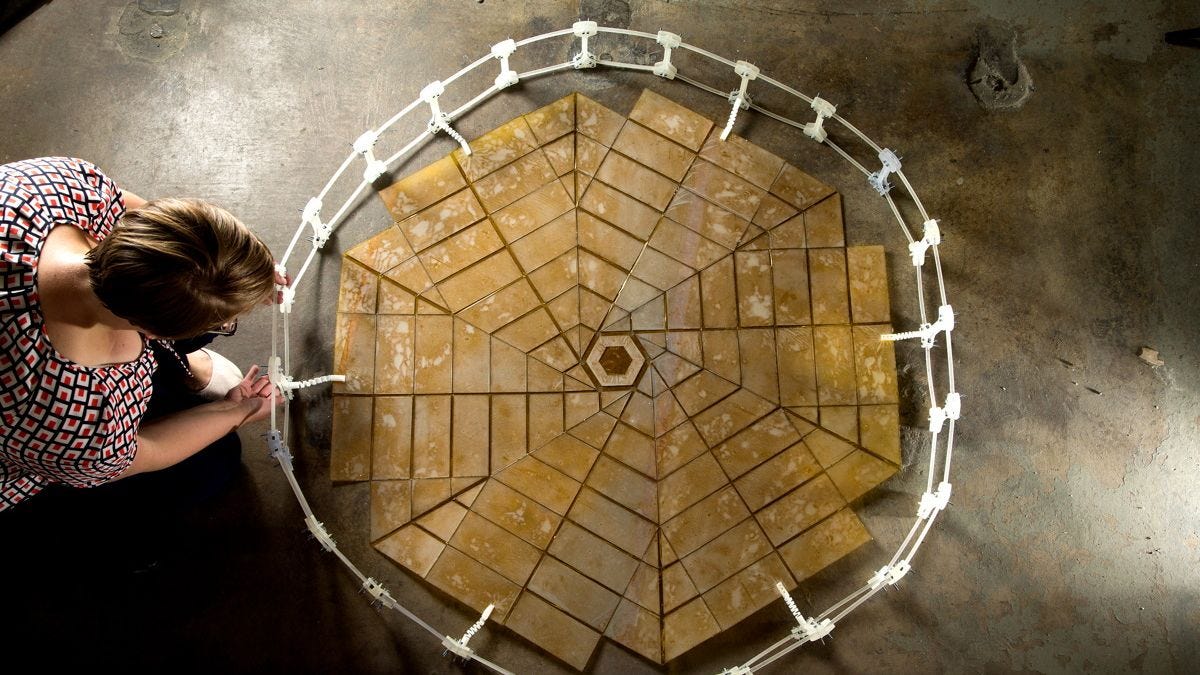
When NASA needs to launch a massive solar array or a starshade the size of a baseball field into space, the biggest challenge isn’t building it — it’s fitting it inside a rocket fairing only a few meters wide.
The solution came from an ancient Japanese art form: origami. By applying mathematical folding patterns, NASA engineers developed structures that pack tightly for launch and deploy reliably in orbit.
That same origami-inspired engineering has now come back to Earth, inspiring lightweight, adaptable buildings, emergency shelters, medical devices, and even consumer products that fold, unfold, and transform with remarkable efficiency.
The breakthrough traces to the 1990s and 2000s at NASA’s Jet Propulsion Laboratory (JPL) and Langley Research Center. Engineers studied the Miura fold (named after Japanese astrophysicist Koryo Miura), a pattern that allows a flat sheet to expand and collapse in one smooth motion without tearing. NASA applied it to solar arrays for the Space Shuttle and later missions.
The most famous example is the Starshade concept for the proposed Habitable Exoplanet Imaging Mission — a giant, flower-shaped occulter that folds like origami to fit inside a rocket and then unfurls to the size of a sports field in deep space to block starlight and reveal distant exoplanets.
Another key project was the Foldable Solar Array technology, refined for CubeSats and future deep-space missions. These arrays use precise crease patterns and smart materials that remember their shape, allowing compact storage during launch and reliable deployment once in orbit. Testing on the International Space Station and in parabolic flights proved the concept could work flawlessly under extreme conditions.
The commercial crossover happened quickly. Companies and universities licensed NASA patents and adapted the principles for terrestrial use. In architecture and civil engineering, origami-inspired designs now create structures that are strong yet lightweight, easy to transport, and rapidly deployable.
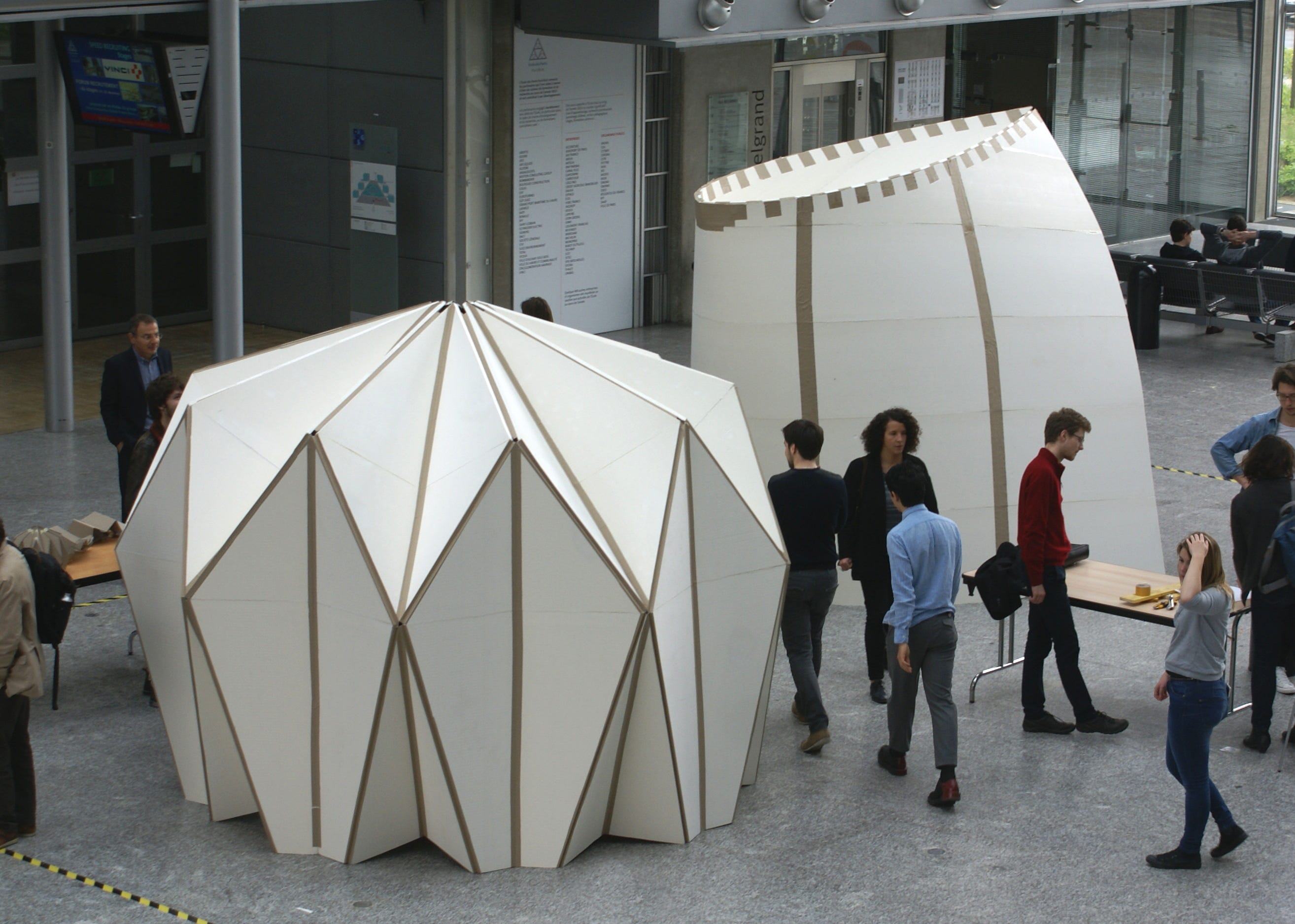
One of the most striking examples is the origami-inspired emergency shelter and disaster-relief housing. After hurricanes or earthquakes, traditional aid can take weeks to arrive. Foldable shelters based on NASA patterns can be flat-packed, shipped by truck or air, and erected by a small team in hours.
Some designs use rigid panels connected by flexible hinges; others incorporate shape-memory alloys or composites that “self-deploy” when triggered.
In permanent architecture, this influence is evident in retractable roofs, adaptive facades, and lightweight bridges. The Hoberman Bridge concept and similar deployable structures draw directly from NASA folding techniques. Architects use computational origami software (some originally developed for space applications) to design buildings that adjust to weather, expand for events, or collapse for storage.
Medical applications are equally impressive. Origami-inspired stents and heart valves can be inserted through tiny incisions and unfold inside the body. NASA-derived folding patterns have also influenced expandable medical tents and portable diagnostic labs for remote or disaster areas.
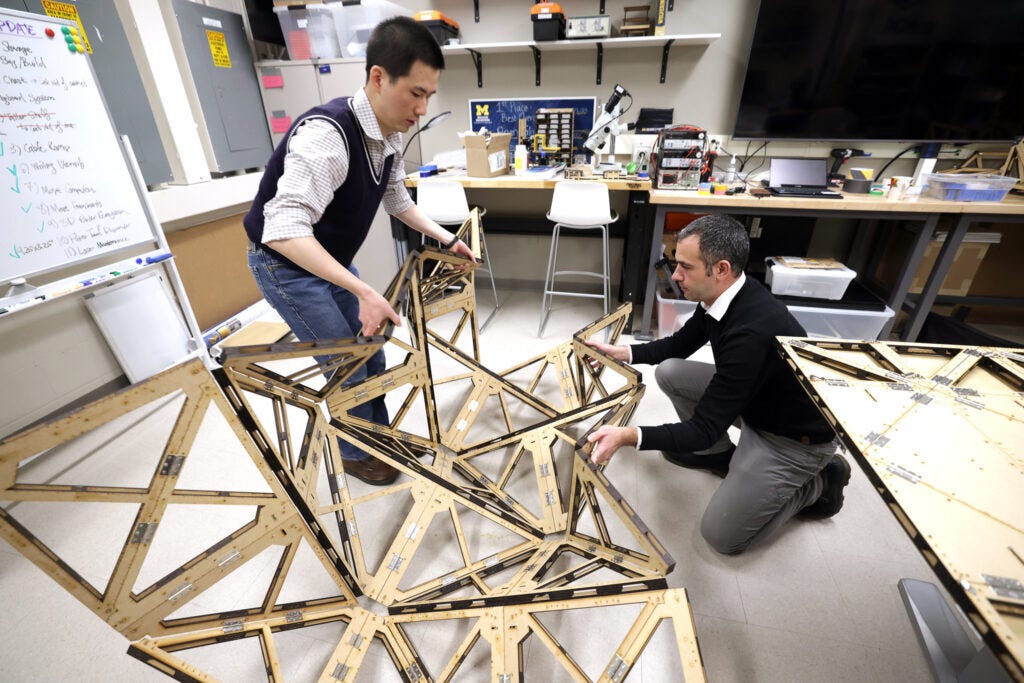
Closer to home in upstate New York, the principles are appearing in innovative local projects. Engineers and designers in the Mohawk Valley and Syracuse region have explored origami concepts for modular housing, temporary event pavilions, and even flood barriers along the Mohawk River.
A SUNY Polytechnic/Cornell-affiliated research group has experimented with foldable emergency response structures that could be stored compactly in Herkimer County fire departments or Red Cross facilities and deployed quickly during winter storms or flooding events common to the area.
“Origami gives us structures that are incredibly efficient — high strength-to-weight ratio, minimal material use, and easy transport,” says a structural engineer familiar with NASA spinoffs. “What works in the vacuum of space translates beautifully to Earth’s challenges of cost, speed, and sustainability.”
The environmental benefits are significant: origami designs often use less material, reduce transportation emissions, and enable adaptive buildings that last longer and adapt to changing needs instead of being torn down and rebuilt.
From a solar array that unfolds silently in orbit to a disaster shelter that pops up in a flooded Mohawk Valley town, NASA’s origami engineering shows how solving packing problems for rockets can solve real-world challenges of space, time, and resources on our own planet.
The next time you see a beautifully engineered retractable roof at a stadium, a lightweight camping tent that packs tiny, or a rapid-response shelter after a storm, remember: its clever folds may have been perfected 250 miles above Earth.
Next on the list: Hydrogen Energy Systems, which will be innovation number 24!
For more space-related stories, visit shuttertothestars.com