

How Microgravity-Made ZBLAN Could Supercharge the Internet
Crystal Clear from Orbit

Fiber-optic cables carry the backbone of the modern internet—trillions of bits per second racing through hair-thin strands of glass across oceans and continents. But even the best Earth-made optical fibers have a fundamental limit: tiny imperfections and impurities created during manufacturing cause light signals to scatter and weaken over long distances.
Enter ZBLAN, a fluoride-based glass that, when made in microgravity, produces fibers with dramatically lower signal loss and the potential to revolutionize data transmission, undersea cables, medical imaging, and even high-speed internet to remote areas.
ZBLAN (zirconium barium lanthanum aluminum sodium fluoride) was first developed in the 1970s as a promising alternative to silica glass for mid-infrared applications. It can transmit light farther with less attenuation because its molecular structure allows smoother internal surfaces and fewer scattering centers.
The problem? On Earth, gravity causes convection currents in the molten glass during fiber drawing, leading to tiny crystals, bubbles, and density variations that ruin optical quality.
The result: ZBLAN fibers produced on the ground were brittle, lossy, and commercially unviable for telecom applications.
NASA saw an opportunity in the 1990s. In microgravity, convection is eliminated, allowing the glass to cool and solidify more uniformly.
Early experiments on the Space Shuttle (missions like STS-73 in 1995 and STS-83 in 1997) proved the concept: ZBLAN preforms processed in orbit produced fibers with infrared attenuation rates up to 10 times lower than Earth-made fibers.
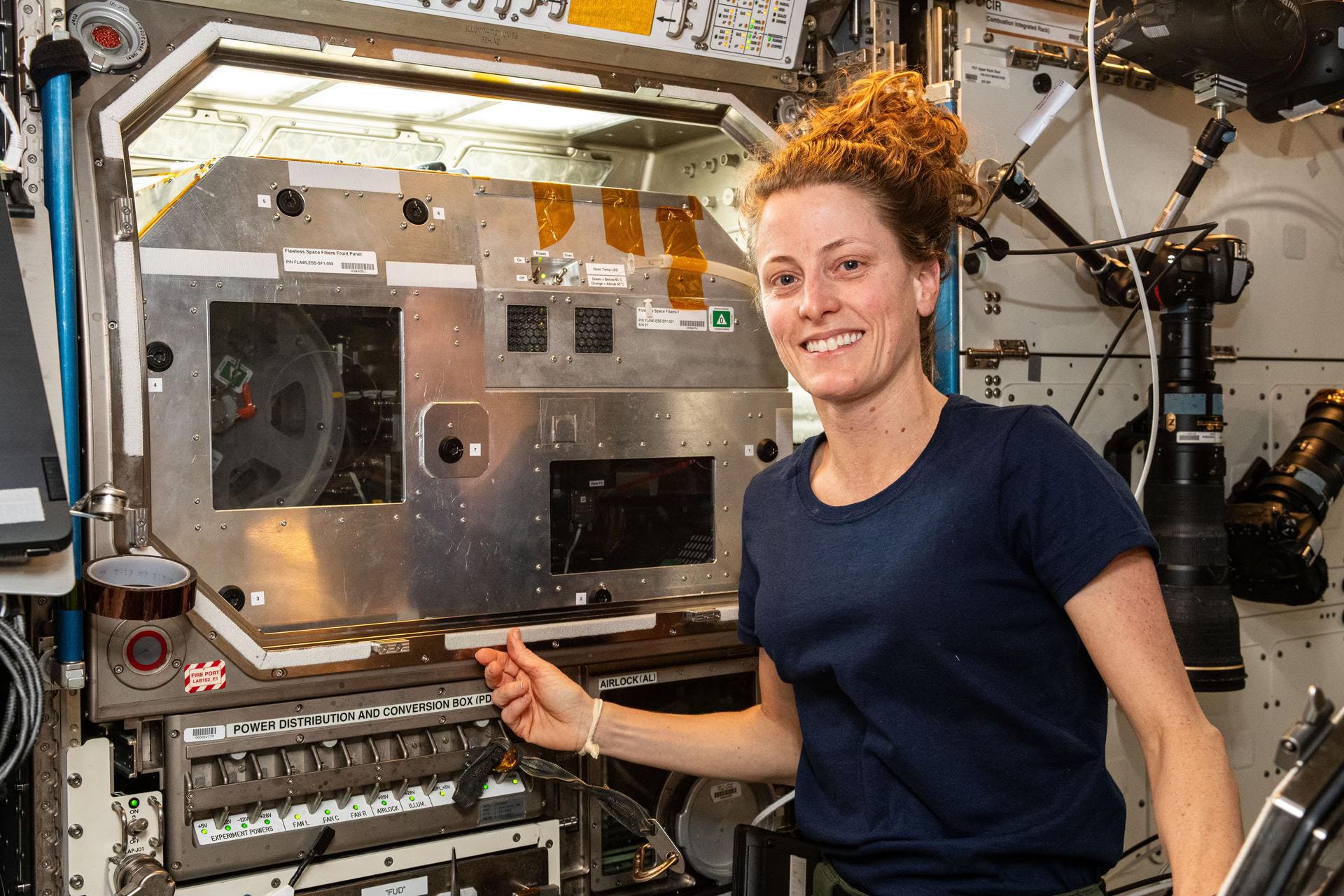
Follow-up work on the KC-135 “Vomit Comet” parabolic flights and later on the International Space Station confirmed the results.
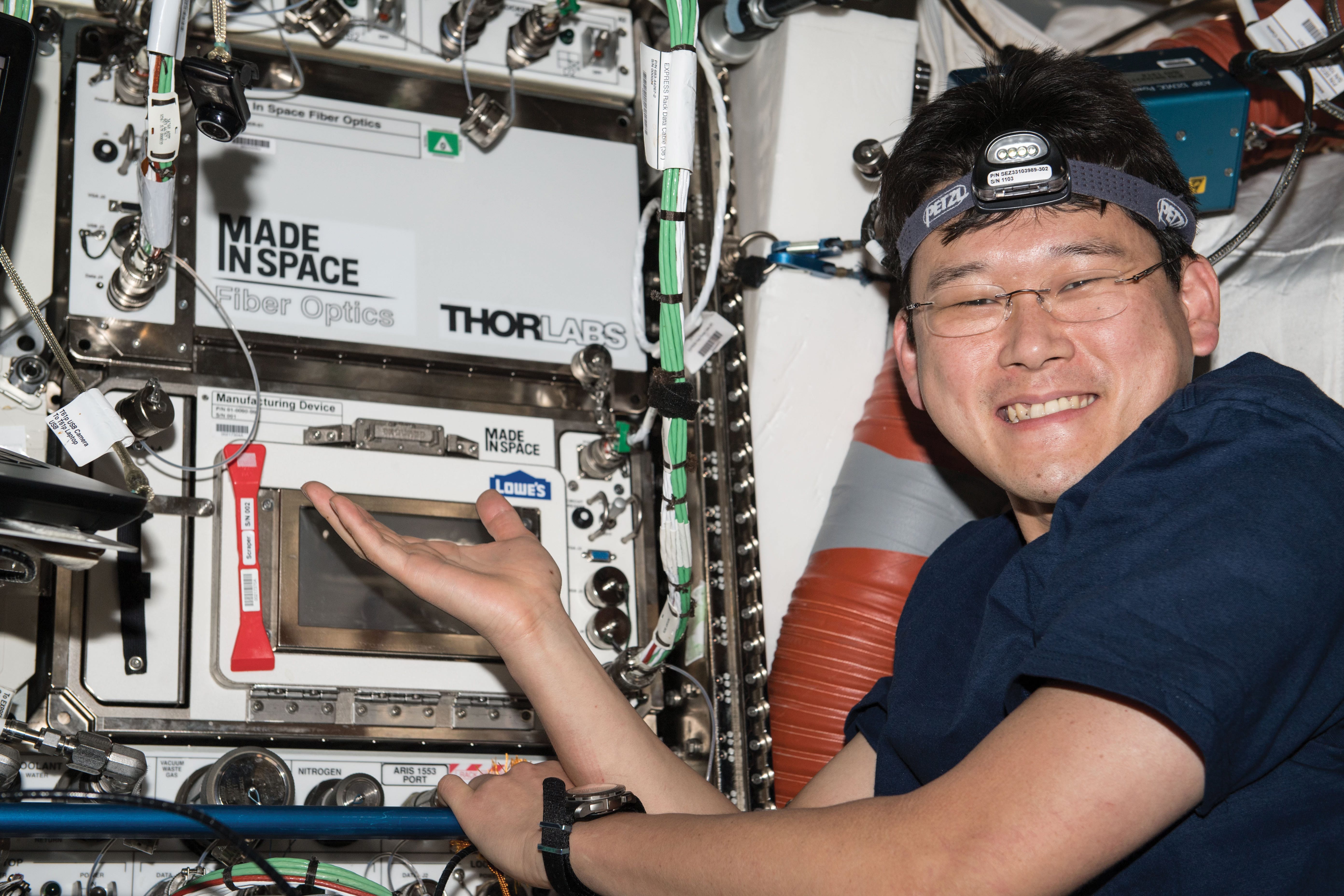
By the 2010s, commercial companies took notice. Made In Space (now part of Redwire) flew dedicated ZBLAN production experiments on the ISS starting in 2017 under NASA’s In-Space Production Applications program.
Using the company’s Additive Manufacturing Facility and custom fiber-drawing hardware, they pulled long lengths of ZBLAN fiber in orbit. Independent testing by the University of Adelaide and others showed signal losses as low as 0.001 dB/km in certain wavelengths—orders of magnitude better than the best silica fibers (around 0.15–0.2 dB/km at 1550 nm).
The implications are huge:
Undersea cables — Today’s transatlantic cables need repeaters every 50–100 km to boost signals. Lower-loss ZBLAN could extend that spacing dramatically, reducing costs, power consumption, and failure points for the global internet backbone.
Data centers & 5G/6G networks — Ultra-low-loss fibers could enable longer runs without amplification, cutting latency and energy use in hyperscale facilities.
Medical & sensing — Mid-IR transmission makes ZBLAN ideal for laser surgery, spectroscopy, and remote chemical sensing.
Rural & space internet — Combined with satellite constellations like Starlink, low-loss fibers could improve ground-station efficiency and last-mile delivery in underserved areas.
Challenges remain: ZBLAN is still more expensive and fragile than silica, and drawing perfect kilometers-long fibers in space is complex. But costs are dropping with repeated ISS production runs, and hybrid fibers (ZBLAN core with silica cladding) are emerging as a compromise.
Companies like Thorlabs, IRphotonics, and Le Verre Fluoré now sell space-processed or space-inspired ZBLAN fibers for niche high-performance applications.
In upstate New York, where rural broadband remains a challenge in places like Herkimer County, the potential for next-gen fiber optics is especially relevant.
Lower-loss cables could make high-speed internet more economical to deploy in remote towns and along existing infrastructure corridors.
The next time your video call stays crystal clear across continents or your internet speed hits gigabits without buffering, a small piece of that magic may trace back to glass melted and drawn in zero gravity aboard the ISS.
As one Made In Space engineer put it during a 2019 ISS experiment: “We’re not just making better fiber—we’re proving that manufacturing in space can produce materials impossible on Earth. The internet of tomorrow might literally be made above the clouds.”
Next up? Satellite Imagery for Mapping.
If you like this article and are interested in space-related news, visit shuttertothestars.com. We’ve even got some great merch! Check it out…